2026 is here, and there is a question that ticks our mind.
Will Australian food manufacturers still be able to rely on the same ingredient suppliers?
OR
Will sourcing strategies need a restart?
The answer is already taking shape. By 2026, ongoing supply chain disruptions, stricter food safety expectations, and rising demand for specialised ingredients are reshaping how businesses choose wholesale food ingredients suppliers Australia and beyond.
Supplier reliability has become an essential requirement for manufacturers, bakeries, beverage producers, and nutraceutical brands.
The theoretical concept has developed into actual existence. Driven by real pressures across the Australian food industry, businesses must establish long-term supplier partnerships instead of reactive sourcing.
Australia’s Food Industry and the Growing Role of Wholesale Suppliers
According to the Australian Bureau of Statistics (2024), the food and beverage manufacturing sector in Australia ranks among the largest industries in the nation because it generates more than AUD 165 billion annually. Manufacturers require uninterrupted access to essential materials as they need to produce their products while maintaining regulatory standards.
Australia imports more than 60–70% of its specialty food ingredients, particularly hydrocolloids, stabilisers and functional additives. Wholesale food ingredient suppliers serve as an essential connection between international production operations and domestic manufacturing processes. Product demand for clean-label vegan and allergen-free products has increased, and suppliers must offer more than They must deliver consistency, traceability and regulatory assurance.
Why Supply Chain Disruptions Are Redefining Supplier Expectations
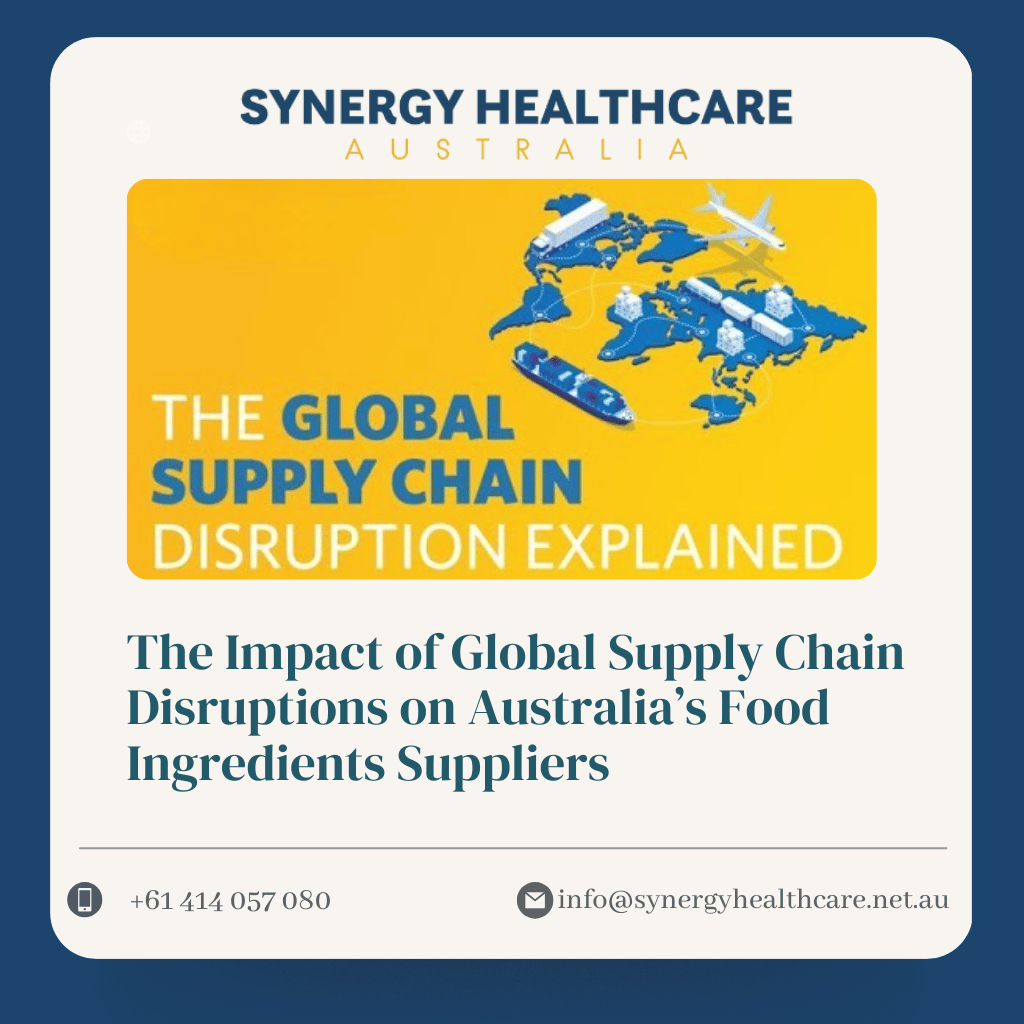
Supply Chain Distribution describes all unexpected interruptions that stop materials from moving from their starting point to their manufacturing location. Since 2020, Australian food manufacturers have experienced delays caused by pandemics, port congestion, labour shortages, and climate-driven raw material shortages.
The 2024 Deloitte Australia Supply Chain Insights report shows that more than 72 %of food manufacturers experienced at least one significant sourcing disruption during the previous two years.
The interruptions produce effects that impact product costs, production schedules, and product distribution. Businesses now choose suppliers based on their ability to maintain operations during extended periods instead of selecting them based on their current pricing model.
Ingredient Availability, Cost Pressure, and Quality Risks
Disruptions in food ingredient supply chains create four major challenges:
- Price volatility: Ingredient shortages increase procurement costs, often with limited notice
- Product reformulation risks: Substituting ingredients can compromise texture, shelf life and flavour of the product.
- Quality inconsistencies: Rapid supplier changes may introduce variability in raw materials.
- Food safety exposure: Rushed sourcing increases compliance and traceability risks.
What Australian Buyers Expect from Wholesale Food Ingredients Suppliers
By 2026, Australian buyers will be prioritising specific supplier capabilities:
- Diversified sourcing networks: Multiple production region access enables suppliers to decrease dependency risks.
- Regulatory alignment: FSANZ ISO 22000 Halal Kosher and export-market standards must be met for compliance.
- Consistency in quality assurance: The system requires batch traceability, together with testing documentation and audit transparency.
- Inventory buffering: The system uses local and regional warehousing to decrease lead-time exposure.
Synergy Healthcare, an established wholesale food ingredients suppliers Australia provide products that meet these requirements across all product categories.
Technology Is Strengthening Supply Chain Reliability
The current food supply chain system depends on technology to manage its ingredient distribution process. Australian suppliers are increasingly using:
- AI-driven demand forecasting to anticipate shortages and manage stock proactively.
- Blockchain-based traceability to provide transparent records from origin to delivery.
- IoT-enabled monitoring to protect ingredient integrity during storage and transport.
According to McKinsey & Company (2024), digital supply chain tools can reduce ingredient waste by up to 20% while improving on-time delivery performance. This reduced operational disruptions and increased trust in manufracturer’s supplier performance.
Looking Ahead: 2026 as a Strategic Turning Point
The year 2026 will see production stability determined by supplier relationships, which businesses need to establish. Businesses that use transactional purchasing methods experience greater risks of shortages, reformulation expenses and compliance violations.
Companies that partner with established wholesale food ingredient suppliers Australia, like Synergy Healthcare, gain access to predictable operational processes and technical assistance.
The Australian food industry now experiences a fundamental transformation, which leads companies to establish permanent supply partnerships instead of using temporary sourcing methods.
Final Thoughts
The current supply chain situation forces wholesale food ingredient providers to become strategic partners instead of their previous role as vendors. The right supplier will play a central role in managing imported ingredient risks and enforcing quality control standards.
Synergy Healthcare provides Australian food manufacturers with reliable ingredient sources that comply with regulations and supply chain knowledge to tackle upcoming difficulties.
Looking ahead to 2026? Connect with Synergy Healthcare today and secure your supply through trusted wholesale food ingredients suppliers.