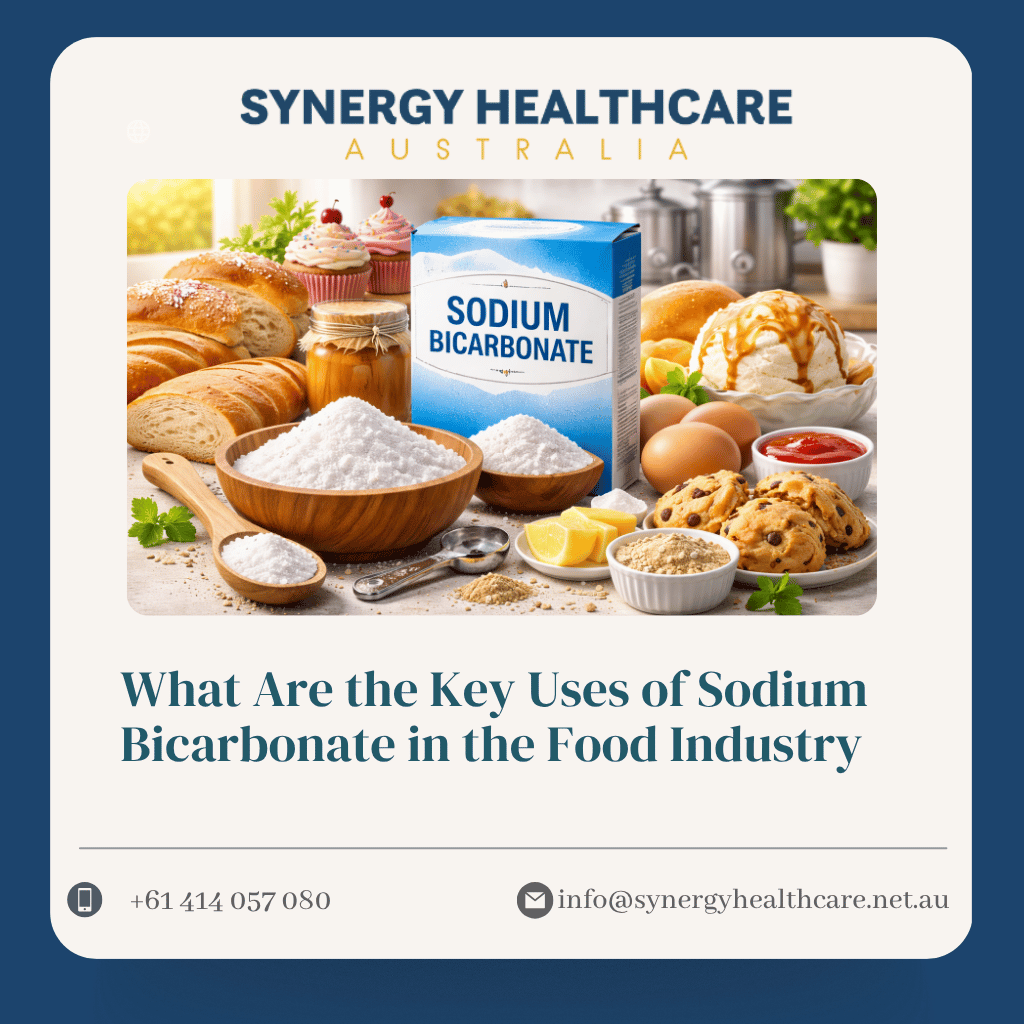
What keeps your cake fluffy, your soda just right, and your packaged snack tasting fresh months after it’s made? You might not think about it, but it’s often thanks to a small, unassuming ingredient: sodium bicarbonate (NaHCO₃).
In Australia’s food industry, sodium bicarbonate isn’t just “baking soda” from the back of your kitchen cabinet. It is a functional ingredient that supports texture, taste, and shelf life.
As production scales and consumer expectations evolve, working with a trustworthy sodium bicarbonate supplier matters more than ever. Consistency across the batches isn’t a nice-to-have; it’s everything.
Understanding Sodium Bicarbonate in Food Processing
Sodium bicarbonate is a white crystalline powder with a mildly alkaline taste. What makes sodium bicarbonate stand out is how it reacts with acids. It produces carbon dioxide gas (CO₂) and makes it indispensable in food systems. From cake batter to the extended shelf life of soup in a can, this little trick is behind some of the staple features in modern foods. It’s safe, too. Both the FDA and EFSA have cleared it as food-safe, so manufacturers can use it widely and with confidence.
Its chemical behaviour is simple yet powerful:
NaHCO₃ + Acid → CO₂ + Water + Salts
-
Leavening Agent in Bakery Applications
If you’ve ever bitten into a soft cake or a pillowy muffin, sodium bicarbonate probably played a role. When it meets something acidic like buttermilk, yogurt, or even a squeeze of lemon, it releases a burst of carbon dioxide. This creates soft and airy textures we look for in baked treats.
Where it’s used:
- Cakes, muffins, cookies
- Pancakes and waffles
- Quick breads, even gluten-free products
Big bakeries need every cake in a batch to rise the same way, every single time. Sodium bicarbonate delivers that, helping keep processes fast and outcomes reliable.
-
pH Regulation and Stability Control
Getting the right pH isn’t just about taste. If it drifts too acidic, foods can spoil sooner, or textures can get weird. Sodium bicarbonate steps in as a buffering agent, neutralising excess acidity in formulations.
Where it’s used:
- Tomato sauces and soups
- Yogurts and processed cheeses
- Canned foods and ready-to-eat meals
Balanced pH improves flavour while preventing unwanted reactions such as curdling or spoilage. For manufacturers, that means fewer returns and less wastage.
-
Texture Enhancement and Tenderisation
Beyond leavening, Sodium bicarbonate helps break down tough proteins and fibres, making meat tenderer and legumes cook faster. It even gives baked goods a softer bite.
Where it’s used:
- Tenderising meat during marination
- Speeding up how quickly beans soften in stews
- Giving gluten-free or plant-based proteins the right texture
For Australian sodium bicarbonate suppliers, especially those working with plant-based or alternative proteins, achieving the right texture is important. Sodium bicarbonate maintains that consistency without any complex processing changes.
-
Food Preservation and Shelf-Life Extension
Sodium bicarbonate helps keep food fresh by creating conditions that make it tough for microbes to grow. Its gentle antimicrobial qualities help packaged foods last longer and stay fresh.
Where it’s used:
- Processed and packaged snacks
- Beverages and ready-to-drink products
- Shelf-stable foods
It keeps the pH steady and slows down microbial activity, so food lasts longer without really messing with the taste. For Australian companies shipping products overseas and dealing with long supply chains, this makes a big difference.
-
Cleaning and Food Safety Applications
In addition to being a food ingredient, sodium bicarbonate is widely used in food processing environments as a cleaning agent. Its alkalinity cuts through grease, clears away stubborn residues, and tackles odours on equipment.
Benefits:
- Safe for food-contact surfaces
- Non-toxic and kind to the environment
- Effective against organic residues
Sticking to hygiene rules is a big deal in Australia’s tightly regulated food industry. Sodium bicarbonate gives you a dependable cleaning option that doesn’t bring harsh chemicals into the production space.
-
Freshness Retention for Fruits and Vegetables
People often add sodium bicarbonate to washing solutions for cleaning fruits and vegetables. It’s great at removing dirt, pesticide residues, and contaminants from fresh produce.
How it works:
- Dissolved in water to create a cleaning solution
- Helps neutralise surface residues
- Extends the freshness of fruits and vegetables
Sodium bicarbonate works better than just water when it comes to reducing pesticide residues. It’s a practical win for anyone who cares about food safety, whether you grow, sell, or just love eating clean produce.
-
Subtle Flavour Balancing
Sometimes food tastes too sharp or acidic. That’s where sodium bicarbonate comes in. It takes the edge off extra acidity, rounding out the flavours so things taste smoother and better balanced.
Where it makes a difference:
- It brings out the sweetness in baked treats.
- It smooths out the flavour in candies.
- Reducing tartness in sauces
The best part? You get to improve flavour profiles without dumping in extra sugar or lab-made additives. That’s especially handy for sodium bicarbonate manufacturers aiming for cleaner labels.
Conclusion: A Core Ingredient for Modern Food Manufacturing
Sodium bicarbonate functions as a vital component that supports contemporary food manufacturing processes. The ingredient has developed into a multi-purpose component that aids entire food production processes, starting from product development through production and ending with product storage and safety measures.
The ingredient provides food manufacturers with a strategic advantage because it combines dependable performance at low costs with multiple application options.
Synergy Healthcare stands as a Sodium bicarbonate supplier in Australia with high-quality ingredients, delivering consistent and reliable solutions tailored to industry needs.
If your supply chain needs improvement, Synergy Healthcare functions as the best sodium bicarbonate supplier near you, bringing production stability.