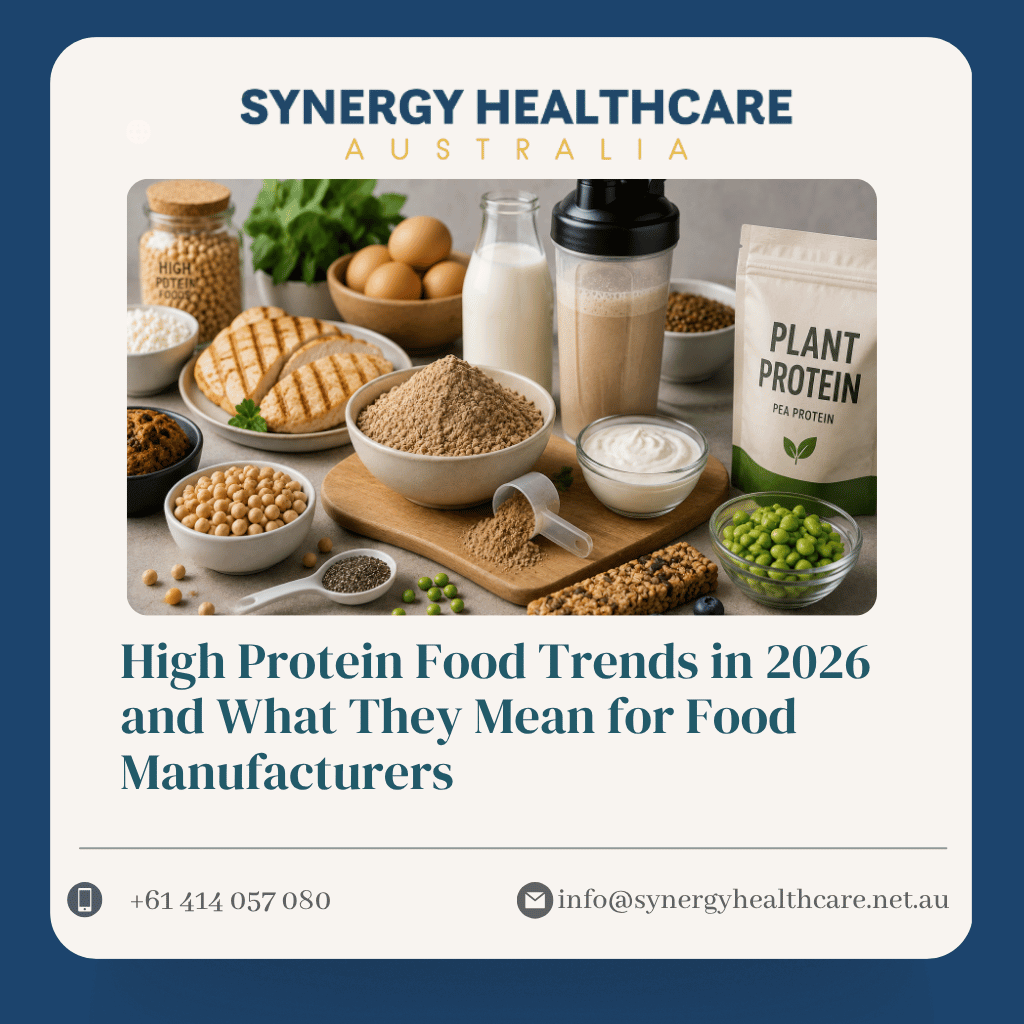
Protein has become one of the defining trends in Australia’s food and beverage scene this year. What used to be a gym bag, a sports-supplement thing, is now sitting on shelves everywhere: yoghurt, bread, cereal, pasta, snack bars, drinks, and even ready meals.
For food manufacturers, that’s a real opportunity. But it also brings a fair few practical questions: formulation, taste, texture, nutrition claims, and where you’re even sourcing the protein from in the first place. Getting a read on where the market’s heading helps manufacturers build products and buy wholesale food ingredients in Australia that actually match what shoppers want, without cutting corners on quality.
2026 High-Protein Trends Manufacturers Should Watch
1. Protein Is Moving Into Everyday Foods
The biggest shift isn’t new protein-specific products showing up; it’s protein quietly working its way into foods that never used to carry it.
Manufacturers are reworking familiar staples like:
- Yoghurt and dairy products
- Protein-enriched bread
- Cereals and granola
- Snack bars and biscuits
- Ready-to-drink beverages
- Plant-based foods
- Convenience meals
That’s a real opening for improving what’s already on the shelf rather than trying to invent a whole new category from scratch.
2. Plant-Based Protein Keeps Evolving
Pea, soy, rice and other plant proteins are becoming familiar names to Australian shoppers now, not just something you’d spot on a health-food label.
But tossing plant protein into a recipe isn’t the whole job. Flavour, mouthfeel, solubility and how it holds up during processing are all matters. Some of these ingredients bring bitterness or grittiness along with them if you’re not careful.
The real formulation challenge in 2026 is delivering that protein without the product tasting like a compromise.
3. Protein and Convenience Are Joining Forces
Australians are busy, and food that fits into a routine without extra thought tends to win. That’s fuelling demand for portable snacks, grab-and-go breakfasts and ready-to-eat protein options.
A snack that survives a work bag or gets eaten straight after a gym session has an obvious edge.
So it’s not just about protein content, packaging, shelf life, portion size and how easy something is to actually eat on the go in all shapes and sizes, whether a product lands.
What This Means for Ingredient Sourcing
As demand keeps climbing, manufacturers need dependable access to the right functional ingredients. Partnering with a solid wholesale food ingredients Australia supplier makes it a lot easier to manage formulation needs, production volumes and consistent supply.
Price shouldn’t be the only thing on the checklist. Worth looking at as well:
- Ingredient quality
- Technical specifications
- Application suitability
- Batch consistency
- Storage requirements
- Traceability and documentation
- Supply capacity
For a manufacturer scaling up a product that’s actually working, an ingredient that performs the same way every single batch is often worth more than the cheapest option on the table.
What Australian Food Labelling Rules Apply to Protein Claims?
Regulation still sits at the centre of all this. The Australia New Zealand Food Standards Code governs nutrition content and health claims, and any manufacturer making protein claims needs to check their product actually meets the requirements before it hits packaging or marketing.
The Nutrition Information Panel also needs to accurately show protein alongside energy, fat, carbs, sugars and sodium. Compliance works best when it’s part of the process early on, not something bolted on right before launch.
Turning the Protein Trend Into a Product Opportunity
Instead of just adding protein to an existing recipe, food manufacturers can respond strategically.
One practical way to do this is to:
- Select a consumer need – convenience, feeling full, an active lifestyle or healthy ageing.
- Choose the right protein source – dairy, plant-based or other suitable ingredients.
- Develop multiple prototypes – test taste, texture, and nutritional performance.
- Check regulatory requirements early – particularly before developing packaging claims.
- Test with real consumers – taste is important, but nutritional value will lead to repeat purchases.
- Secure scalable ingredient supply – avoid launching a product that cannot be consistently manufactured.
The Opportunity for Australian Food Manufacturers
The trend towards protein has become much more than just a temporary fitness trend. The inclusion of protein into the more conventional food categories indicates that something much bigger is occurring among Australian consumers’ criteria for product evaluation.
Manufacturers need to focus on those products where all these criteria- protein content, taste, convenience, price, and good nutrition are balanced together.
For manufacturers to succeed in the future, the availability of reliable ingredients and formulations will become a key factor. If you are looking for solutions for protein-enhanced bakery items, drinks, snacks, or other types of food, you know where to go.
Key Takeaways for Food Manufacturers in 2026
Before reformulating or launching a high-protein product, it’s worth asking:
- Who’s the target consumer?
- What protein level suits this product?
- Which ingredient performs best technically?
- Will protein affect taste or texture?
- Can it be produced consistently at scale?
- Are the claims actually compliant?
- Can ingredients be sourced reliably?
Manufacturers who work through these questions early tend to turn Australia’s growing appetite for protein into something that actually sells, rather than a product that looks good on paper and falls flat in-store.
Final Thoughts
Australia’s high-protein trend is only getting broader and more mainstream heading through 2026. Shoppers want the nutritional upside, sure, but they still expect convenience, decent flavour and something that fits naturally into how they already eat.
For manufacturers, that means real protein innovation takes more than stirring an ingredient into an existing recipe. It takes proper formulation work, dependable sourcing and a genuine read on what the Australian market’s actually asking for.
If you’re developing or scaling food products and need ingredient sourcing you can rely on, Synergy Healthcare can help you find the right fit for your manufacturing needs.
Frequently Asked Questions
- Why do high-protein products become popular in Australia in 2026?
People in Australia need to have their daily food that keeps them fuller for longer and suits their active lifestyle.
- What kind of high-protein products can be found in Australia?
Enriched with protein yoghurts, bakery products, cereals, granolas, snack bars, drinks, plant-based products, and ready-made meals.
- What should be kept in mind while selecting protein sources by manufacturers?
Flavour, texture, water solubility, and processing qualities, along with shelf life, consistency, and reliable supply.
- How can wholesale food ingredients Australia suppliers help manufacturers?
They offer consistent raw materials in required quantities, thus supporting production planning and formulation.
- Are there regulations on high-protein food claims in Australia?
Yes. Any protein claim should conform to the Australia New Zealand Food Standards Code; hence, it is important to check whether the claim holds water before manufacturing.