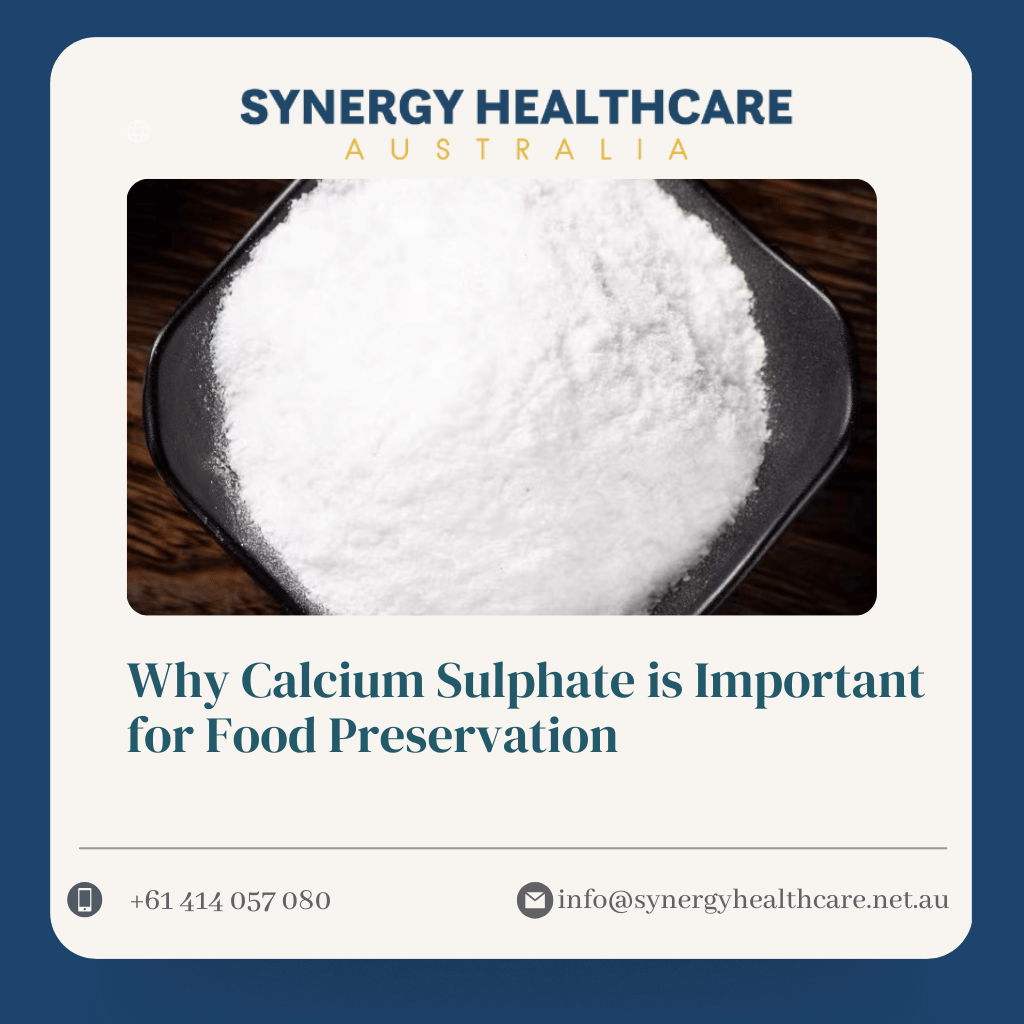
In food manufacturing, shelf life is more than just a number; it’s a strategy. Texture is reputation. Stability is profit. Tucked away in the ingredient lists of all kinds of preserved, structured, and fortified foods, one mineral quietly does the heavy lifting: Calcium Sulphate (CaSO₄).
For Australian food manufacturers, especially those juggling tight safety rules, tough export standards, and the push for cleaner labels, calcium sulphate has become a functional and regulatory ally. It’s a practical, reliable partner.
From tofu to canned veggies, bakery blends, and all sorts of fortified drinks, you’ll find it everywhere. Its role in food preservation extends far beyond basic formulation.
So, what makes this mineral such a staple? And why does your choice of Calcium Sulphate supplier really matter now, more than ever?
Understanding Calcium Sulphate in Food Systems
Calcium sulphate comes from mineral deposits like gypsum (CaSO₄•2H₂O). Before it lands in your food, it’s refined to meet strict standards for safety and purity.
Both the U.S. FDA and the European Food Safety Authority (EFSA) say it’s Generally Recognised as Safe (GRAS) if you stick to approved amounts. In Australia, FSANZ allows it as a food additive and firming agent, too.
Since it doesn’t dissolve much in water, calcium sulphate releases calcium ions slowly and steadily. That’s exactly what you want for stabilising and preserving food.
How Calcium Sulphate Enhances Food Preservation?
Food preservation methods maintain the original structure of food while preventing spoilage and extending shelf life without dangerous health effects. Calcium sulphate steps up in a few important ways:
1. Firming and Structural Stability
You should consider using canned vegetables, pickles and plant-based foods as your food options. The combination of calcium sulphate and pectin from cell walls enables your vegetables to maintain their firmness throughout both cooking and storage periods.
Tofu requires calcium sulphate to function as its coagulant. The substance interacts with soy proteins, creating those stable, springy networks that lock in moisture and resist breakdown over time. It shapes texture and helps tofu last longer.
2. Moisture Regulation
Because CaSO₄ barely dissolves, it helps foods hold onto just the right amount of moisture. This is a big deal for baked goods and processed foods that require structural consistency during shelf life.
3. pH Balance and Stability
Depending on its hydration, calcium sulphate keeps things neutral or slightly alkaline. In certain formulations, it stabilises the pH level, which is huge for blocking unwanted microbes and making preservation more effective.
Nutritional Contribution and Clean-Label Compatibility
Calcium sulphate serves a dual purpose: preservation and fortification. The product provides bioavailable calcium which supports nutritional claims for its fortified foods. The increasing demand for plant-based dairy alternatives and functional beverages across Australia has created a greater need for calcium fortification.
IBISWorld (2024) states that the Australian health food and beverage industry continues to expand, it creates continuous market need for mineral enrichment products.
On the label, calcium sulphate is straightforward. When sourced from a reputable Calcium Sulphate supplier, it aligns perfectly with clean-label expectations.
Food-Grade vs Industrial-Grade: Why Purity Matters?
The requirement exists that only certain types of calcium sulphate can be used in food production.
Food-grade calcium sulphate is different from other types of calcium sulphate.
- The process requires complete purification of the material.
- The substance lacks harmful properties and emits no smell while appearing uncoloured.
- The product meets all FSANZ, FDA and international safety requirements.
- The system provides both Certificates of Analysis and complete traceability documentation.
Construction and cement production use industrial-grade calcium sulphate as a standard material.
The product fails to meet food safety standards because it does not reach the necessary food purity levels, making it unsuitable for any food-related purposes.
If you’re an Australian manufacturer, finding a supplier you trust for food-grade calcium sulphate isn’t just about following the rules. It means your products are safe, audits run smoothly, and you’re always prepared when someone requests proof.
Production and Quality Control
You can get calcium sulphate from natural gypsum or by reacting calcium carbonate with sulphuric acid. Either way, you end up with CaSO₄ after the reaction. Food-grade production involves:
- Raw material selection
- Controlled reaction and precipitation
- Impurity removal
- Controlled drying and packaging
Real quality control never skips the details. Every batch gets checked for heavy metals, moisture, particle size, and microbiological safety. In Australia’s export-focused food industry, these checks aren’t just about safety; they protect your brand’s reputation.
Sustainability and Environmental Considerations
These days, responsible sourcing is becoming central to procurement decisions. If you’re using natural gypsum, you have to think about the environment. Sustainable production practices by a good supplier include:
- Efficient water management
- Controlled waste disposal
- Reduced carbon emissions in processing
Many global producers are investing in environmentally responsible mining and refining. When you choose a reliable Calcium Sulphate supplier, it aligns food manufacturing with ESG goals and sustainability reporting standards.
Bottom Line: Choosing the Right Partner for Long-Term Stability
Looking ahead to 2026, things aren’t getting any easier. Supply chains are tighter, regulations keep getting tougher, and consumers want to know exactly what’s in their food. Calcium sulphate helps you keep products fresh, gives consistency to texture, adds nutritional value, meets regulator expectations, and does all of that without breaking the bank.
If you’re looking for a partner you can count on, Synergy Healthcare leads the way for Australian food manufacturers. We offer top-quality food-grade calcium sulphate, expert advice, and solid distribution.
Ready to boost your shelf life and keep your products strong? Reach out to Synergy Healthcare, Australia’s trusted wholesale food ingredient supplier for calcium sulphate.